

What Is Technical SEO? A Practical Explanation for Modern Websites
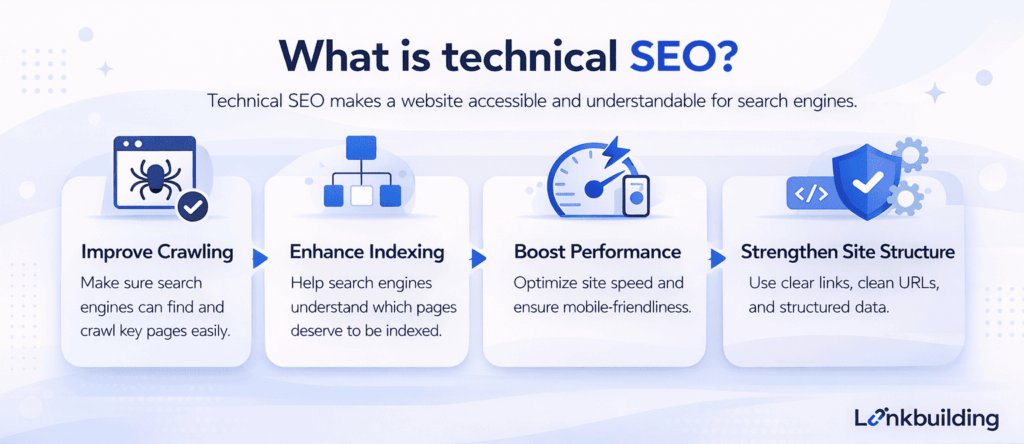
Technical SEO is the part of SEO that helps search engines access, understand, and index your website correctly. It sits behind the visible content, but it has a direct impact on whether that content can perform in search at all.
Many websites publish strong articles, target the right keywords, and still struggle to rank consistently. In many cases, the issue is not the content itself. The problem is that search engines are running into technical friction. Important pages may be hard to crawl, duplicate URLs may create confusion, or the site may send weak signals about which pages matter most.
That is why understanding what is technical SEO matters. It is not a niche add-on for developers. It is a core part of building a website that can grow sustainably in organic search.
What Is Technical SEO?
Technical SEO is the process of improving a website’s technical foundation so search engines can crawl it efficiently, interpret it accurately, and index the right pages.
In simple terms, content explains what a page is about, while technical SEO helps search engines find that page, process it properly, and understand how it fits into the rest of the site.
Technical SEO typically includes areas such as:
- crawlability
- indexability
- site architecture
- URL structure
- internal linking
- canonical tags
- XML sitemaps
- page speed
- mobile usability
- structured data
- redirects
- HTTPS
Not every website needs the same level of technical work. A small local business site and a large ecommerce platform face different technical challenges. But every site needs a setup that allows search engines to access and evaluate its content without unnecessary obstacles.
Why Technical SEO Matters
Technical SEO matters because rankings depend on more than content relevance. A page can be well written and aligned with search intent, but it may still underperform if search engines cannot crawl it properly or are unsure whether it should be indexed.
It improves crawl efficiency
Search engines do not spend unlimited time on every website. If they waste time on broken pages, duplicate URLs, or low-value archives, important pages may be crawled less efficiently.
Technical SEO helps reduce that waste and makes it easier for search engines to focus on the pages that matter.
It improves indexing quality
More indexed pages do not automatically mean better SEO. In fact, many websites weaken their organic performance by letting too many thin, duplicated, or low-value pages enter the index.
A good technical setup helps search engines understand which pages should be indexed and which should not.
It strengthens site structure
Technical SEO also supports site architecture. Clear navigation, logical hierarchy, and strong internal linking make it easier for search engines to understand topic relationships across the site.
That matters even more on websites using a cluster structure, where related articles support broader topic coverage.
It supports user experience
Technical SEO overlaps with usability in several areas, especially page speed, mobile performance, and site stability. Search engines increasingly evaluate websites through the quality of the experience they deliver.
How Technical SEO Works
Technical SEO works by improving how search engines move through a website.
At a basic level, search engines discover URLs, crawl them, render the content, interpret the page, and then decide whether to index it. Technical SEO influences each of those steps.
Discovery
Search engines find pages through internal links, XML sitemaps, backlinks, and prior crawl history. If an important page is poorly linked or buried too deep, it may be slower to discover.
Crawling
Once a page is found, search engines decide whether to crawl it. That depends on page value, server health, crawl signals, and technical accessibility.
Technical SEO improves this by reducing friction such as redirect chains, broken links, and duplicate URL paths.
Understanding
Search engines then try to understand the page and its purpose. This is where HTML structure, JavaScript rendering, canonical signals, and internal context all matter.
Indexing
After that, search engines decide whether the page should be included in the index. If a page is weak, duplicative, or technically unclear, it may be crawled without being indexed properly.
Key Areas Within Technical SEO
Technical SEO includes several connected topics. Some of the most important are below.
Crawlability and indexability
These are closely related but not identical.
A page can be crawlable but blocked from indexing. It can also be technically indexable but hard to discover because internal linking is weak.
A practical review usually asks three questions:
- Can search engines access this page?
- Should this page be indexed?
- Is this the preferred version?
Site architecture
A clear site structure helps search engines understand which pages are most important and how related topics connect. Good architecture usually means shallow depth, logical grouping, and no orphan pages.
URL structure and canonicalization
Clean URL structures help reinforce clarity. Canonical tags help search engines understand which version of a page should be treated as the main version when similar URLs exist.
This becomes especially important on larger sites with filters, parameters, or duplicated template paths.
XML sitemaps
XML sitemaps help search engines discover important URLs, especially on larger or frequently updated sites. They are not a replacement for internal linking, but they support discovery when implemented correctly.
Page speed and mobile usability
Technical SEO also covers performance. Slow pages, unstable layouts, and poor mobile rendering can create friction for both users and search engines.
This is why related topics such as site speed and Core Web Vitals often sit close to technical SEO within a content cluster.
Structured data
Structured data helps search engines understand content more precisely. It can clarify page types, entities, and content attributes, which may improve how pages are interpreted in search.
Common Technical SEO Mistakes
Many technical problems come from website growth, redesigns, or CMS behavior rather than obvious neglect.
Indexing low-value pages
Tag pages, filter combinations, search result pages, and thin archive URLs often enter the index when they should not. This can dilute overall site quality.
Weak internal linking
Important pages often underperform because they are not linked clearly enough from relevant pages across the site.
Overreliance on canonical tags
Canonical tags are useful, but they should not be used as a patch for messy site structure or uncontrolled duplication.
Poor redirect management
Broken redirects, redirect chains, and careless migration handling can damage organic performance quickly.
Treating technical SEO as a one-time fix
Technical SEO needs ongoing review. New templates, plugins, scripts, and navigation changes can create new issues over time.
Practical Guidance
The best way to approach technical SEO is to stay strategic.
Start with the pages that matter most to the business. Focus on the templates and technical patterns that affect those pages. Prioritize crawlability, index control, internal linking, and performance before chasing minor issues that have little business impact.
It also helps to define a clear indexation policy. Not every page should rank. Some pages exist to support navigation or filtering, while others should be treated as primary SEO assets.
For websites building topical authority, technical SEO should also support strong relationships between related articles. This page, for example, can naturally connect to supporting articles on canonical tags, XML sitemaps, crawl budget, internal linking, or technical SEO audits.
Timing and Expectations
Technical SEO improvements can produce different timelines depending on the issue.
Some fixes, such as correcting blocked pages or broken canonical signals, may affect crawling and indexing relatively quickly once search engines revisit the site. Others, such as improving architecture or internal linking, usually take longer to influence rankings.
It is also important to stay realistic. Technical SEO helps remove friction and improve visibility potential, but it does not replace strong content, search intent alignment, or authority.
Conclusion
So, what is technical SEO? It is the part of SEO that helps a website function properly for search engines.
It ensures that important pages can be found, crawled, understood, and indexed without unnecessary confusion. It also supports site structure, performance, and long-term scalability.
A strong technical foundation will not guarantee rankings on its own, but it gives every other SEO effort a better chance to succeed. Without it, even good content can struggle to perform as well as it should.